
Traffic Case Records in Grand County
Traffic and parking citations in Grand County go to the Grand County Justice Court. It sits at 125 E. Center Street in Moab. That court also takes infractions, Class B and C misdemeanors, and ordinance violations. Safety citations written to river runners fall there too. Its clerk keeps the whole traffic case history. That covers citation data, events, the plea, the balance, and the disposition. The official court directory lists no separate Moab or Castle Valley municipal court. Even so, the citation itself controls. Read the court name on the ticket before picking a portal.
A serious charge travels a different track. Felonies and qualifying Class A matters belong to the Seventh District Court in Moab. Routine Grand County traffic records stay with Justice Court. Per Utah Courts, a citation names the deciding court and the location. It also lists the response or appearance deadline, the instructions, and the cited code. Staff then enter events into CORIS, and public information flows out to Xchange. The official Utah traffic guidance lays out how citations are classified and answered.
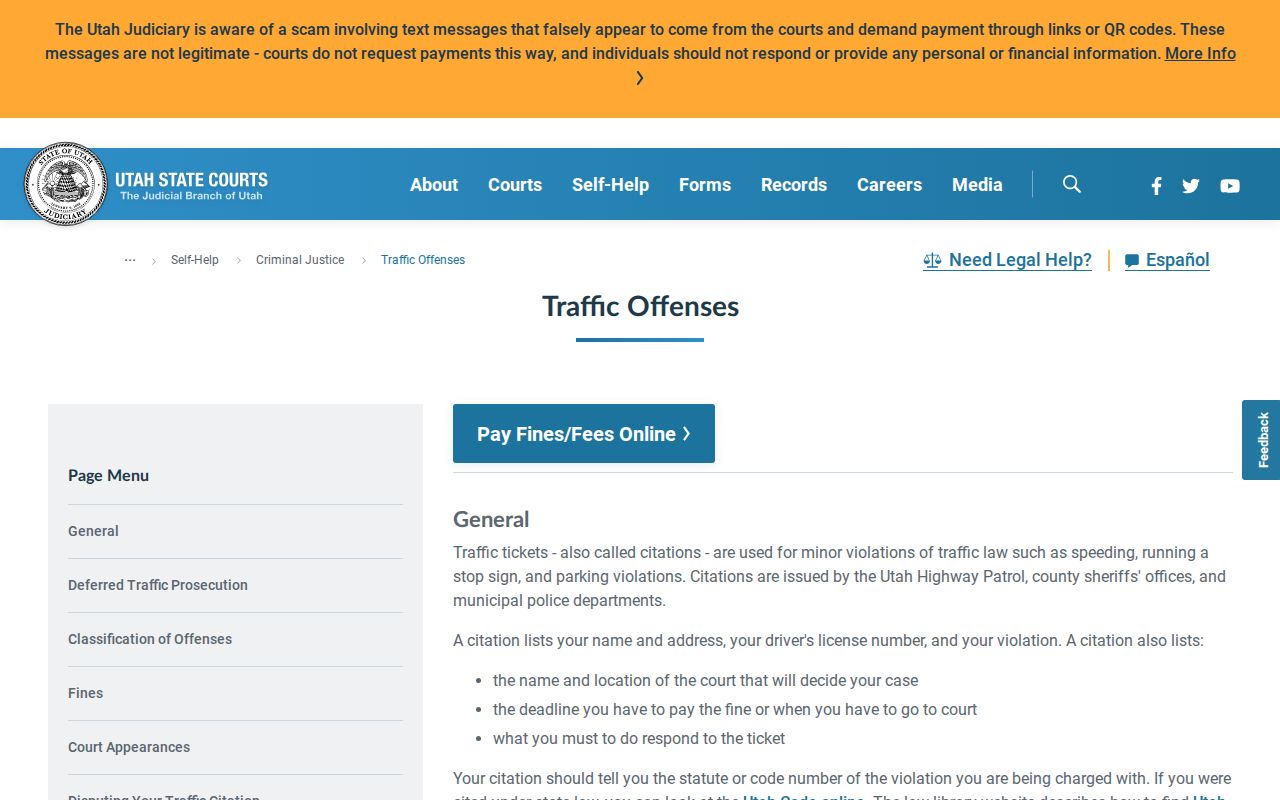
The state page draws the line that matters most. It helps a reader tell a required court appearance from a citation that can be settled by paying the stated bail amount.
Grand County’s Citation Deadline
Deadlines here are firm and county-stated. Grand County's official traffic page requires full payment within 21 calendar days after issuance. Miss that and the case turns delinquent. A $50 fee is added. Another 15 days past delinquency brings an added $75 fee and a warrant.
Quick answer: Contact the Grand County Justice Court as soon as a citation cannot be found, a balance looks wrong, or the response date is near.
Paying is only one way to respond. Someone who wants to contest the charge must appear. They then enter a plea under the court's instructions. Never let an online search failure eat up the response period. New citations take time to reach CORIS. A quick call to the clerk confirms whether the ticket has hit the court's docket.
Grand County Traffic Ticket Lookups
Several lookup routes exist. Utah Courts Xchange searches public Justice Court data by citation number, case number, or party name. Citation and case numbers are not unique statewide. Narrow the docket search to Grand County or the Moab court. The county also links a Secure Instant Payments page with its own case or citation search path. Utah ePayments offers another state route, though not every court uses it.
- Read the citation and identify the court, citation number, violation date, and response instructions.
- Search Xchange with Justice Court selected, the citation or case number, and Grand County or Moab scope.
- Check the county-linked payment search if the official Grand County page routes the ticket there.
- Without a usable online result, call 435-259-1334 or email jcmoab@utcourts.gov.
- Visit the Justice Court counter at 125 E. Center Street when an in-person review or payment is needed.
- Record the case number, current balance, appearance date, and status only after matching the court and citation.
The Justice Court's posted public hours, reported in 2024, run 8 a.m. to 4:30 p.m. on business days. Call before you drive over. A free Xchange terminal may sit at a court location, but confirm Justice Court access first.
Grand County’s Payment Portal
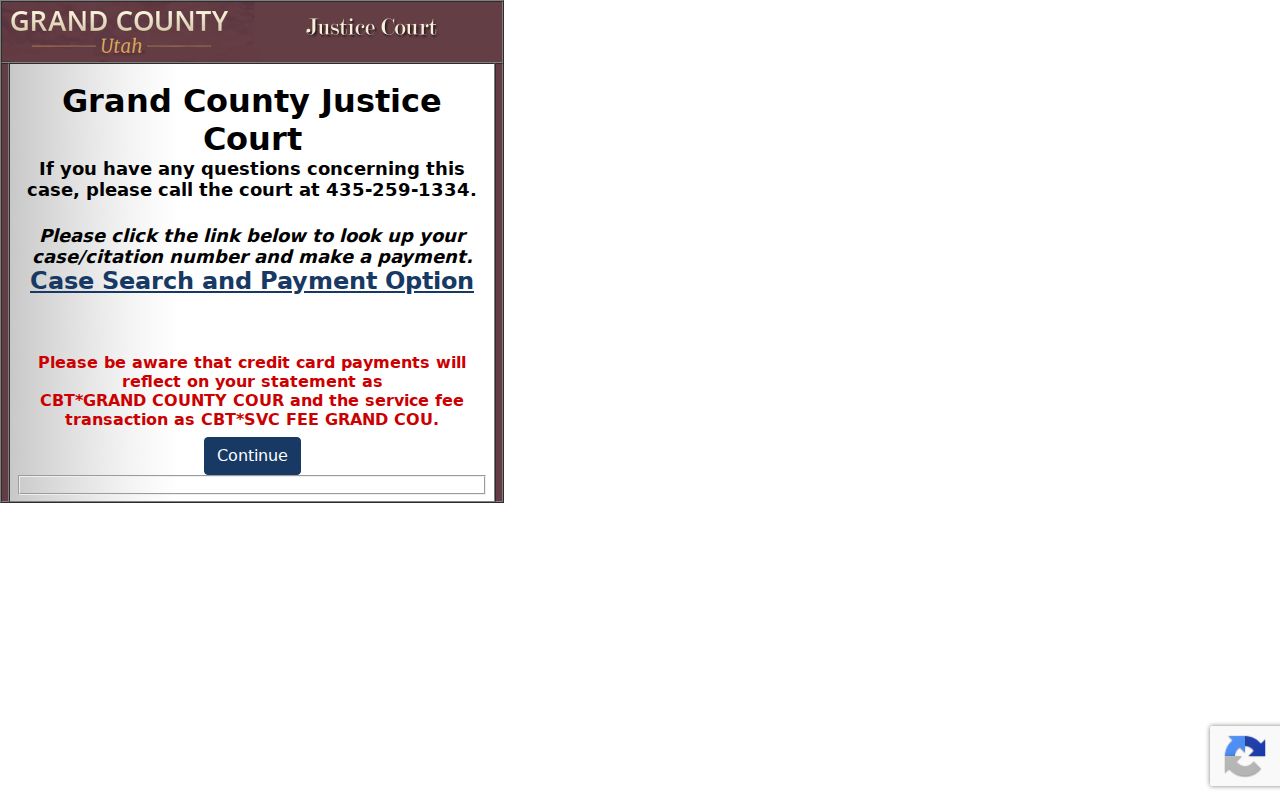
Start at the Grand County traffic page. It states local deadlines, accepted payment types, and the linked vendor. The Secure Instant Payments landing page offers a case or citation search link plus payment, name, account, card, and billing fields. Keep in mind the linked CORIS search is dynamic, so labels can change. Confirm the displayed case before entering payment details.
The county's payment guidance appears there too. The local late and warrant rules sit right beside the Grand County traffic court payment routes on that same official page.
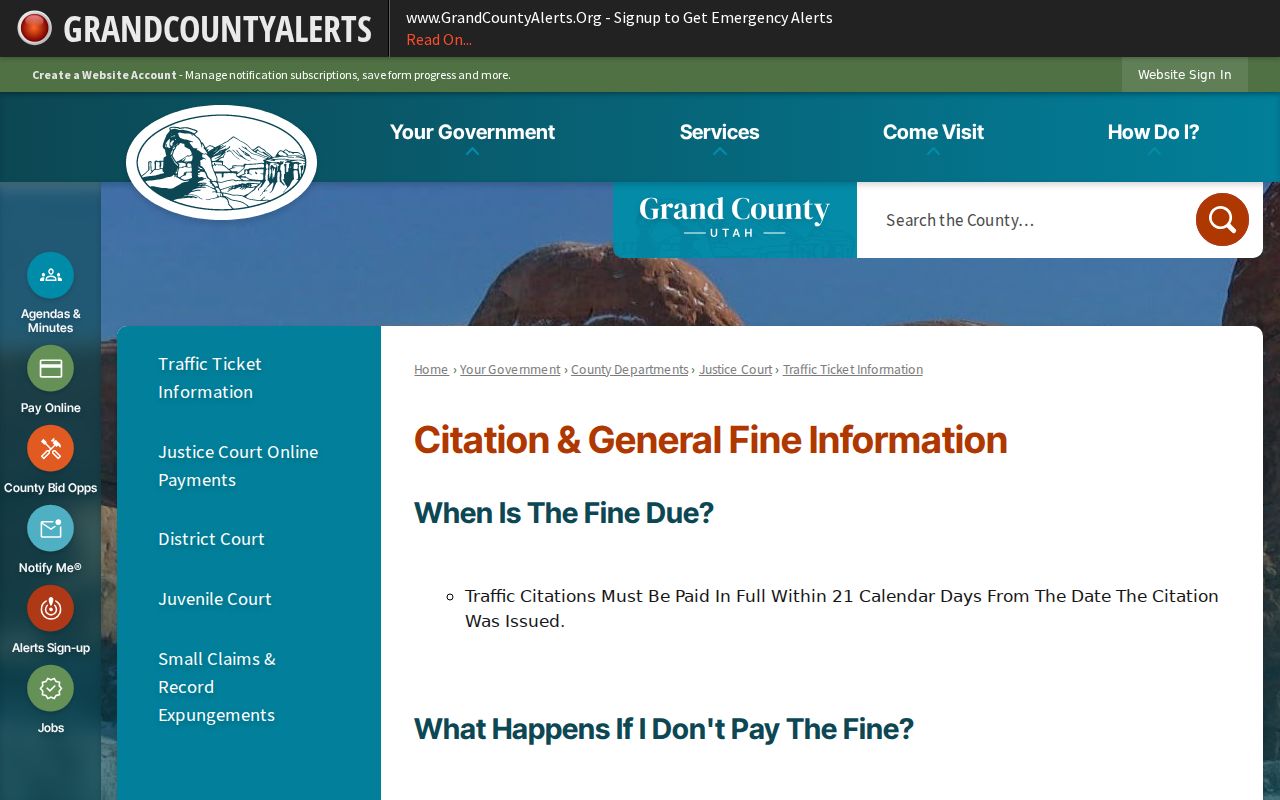
That official page makes the point plainly. Not every Utah court accepts payment through the same gateway, so rely on the county's current page instead of assuming one statewide portal.
Traffic Court Dates in Grand County
A response deadline printed on a citation is not always the later hearing setting. Check the ticket first. Then use the Utah District and Justice Court calendar. It covers scheduled activity across a two-week period and updates daily. Xchange proceedings can show prior settings and resets. After a change, the latest calendar and a call to the clerk are safer.
| Citation number | The identifier printed on the ticket, shown in the file as citation number on notice; it is not unique statewide. |
|---|---|
| Case number | The court-assigned number used in Xchange and ePayments after the case is entered. |
| Court | Usually Grand County Justice Court for the documented local traffic docket. |
| Date and time | The current scheduled appearance, checked against the daily updated calendar. |
| Judge or room | The assigned judge and courtroom or remote-hearing detail when shown. |
| Status | Pending events, plea, disposition, payment balance, or warrant-related entries. |
Call the Justice Court after a reset, a missed date, or a calendar mismatch. An old event can linger in the case history after a new setting is made. For broader hearing information, see the Grand County court schedule.
When Grand County Tickets Are Missing
A Grand County docket search can come up empty for a few reasons. A recent citation has not entered CORIS yet. The wrong court level may have been selected. The citation number may have been entered without Grand County scope, or the name differs from the filed form. Search by both citation and case number if you have them. For a name search, use the official Xchange wildcard method. Then confirm county, court, violation date, and case type.
If the vendor cannot find the ticket, never pay a guessed match. Call 435-259-1334. Give the number from the citation, and ask whether the case is in CORIS. The clerk can also confirm the balance. Ask about the next court date, too, and any delinquency or warrant entry. That is a court-status check, not legal advice.
Paying a Ticket vs Fighting It
Many Utah infractions can be settled by paying the bail amount. Others require a court appearance instead. Paying resolves the charge through the court process. If you contest the ticket, you must appear. You enter a plea, and you take whatever setting the court assigns. The judge sets the fine. The Uniform Fine Schedule and Justice Court Bail Schedule guide the standard amounts.
| Paying the Grand County ticket | Contesting the Grand County ticket |
|---|---|
| Follow the citation and court payment instructions. | Contact or appear in the deciding court and enter a plea. |
| Use the county-linked vendor, an accepted counter method, or an available state route. | Do not pay first when the intent is to dispute the charge; ask the clerk for the response path. |
| Confirm the name, case, total, and added fees before submitting funds. | Track the hearing through the calendar and the court's direct notice. |
| Keep proof and later check the court record for disposition. | Read later docket events for settings, plea, and final disposition. |
Missed deadline or date: Call the Grand County Justice Court at once. The county states that delinquency adds $50, and 15 more days can add $75 and a warrant.
Grand County lists the counter payment options: personal check, cashier's check, money order, or Visa, Mastercard, or Discover. Never put money in the courthouse dropbox.
Grand County Deferred Traffic Prosecution
Deferred Traffic Prosecution is a statewide option for certain moving violations. The steps are exact. Wait at least five days for the citation to enter the system. Then use MyCase, and register within 21 days. Plead no contest. Pay a $5 registration fee plus the fine within 14 days. Traffic school, when required, costs $40 online and must be finished within 28 days. A clean one-year period brings dismissal, though paid money is not refunded. Eligibility rules demand an age of at least 21. You also need a valid Utah license and no commercial license. State limits also tie eligibility to recent history, accidents, and speed. Check the Utah DTP page before choosing the program. Grand County does not offer traffic ODR. The state screen places DTP and ODR side by side. But only a program that serves the deciding court can be used.
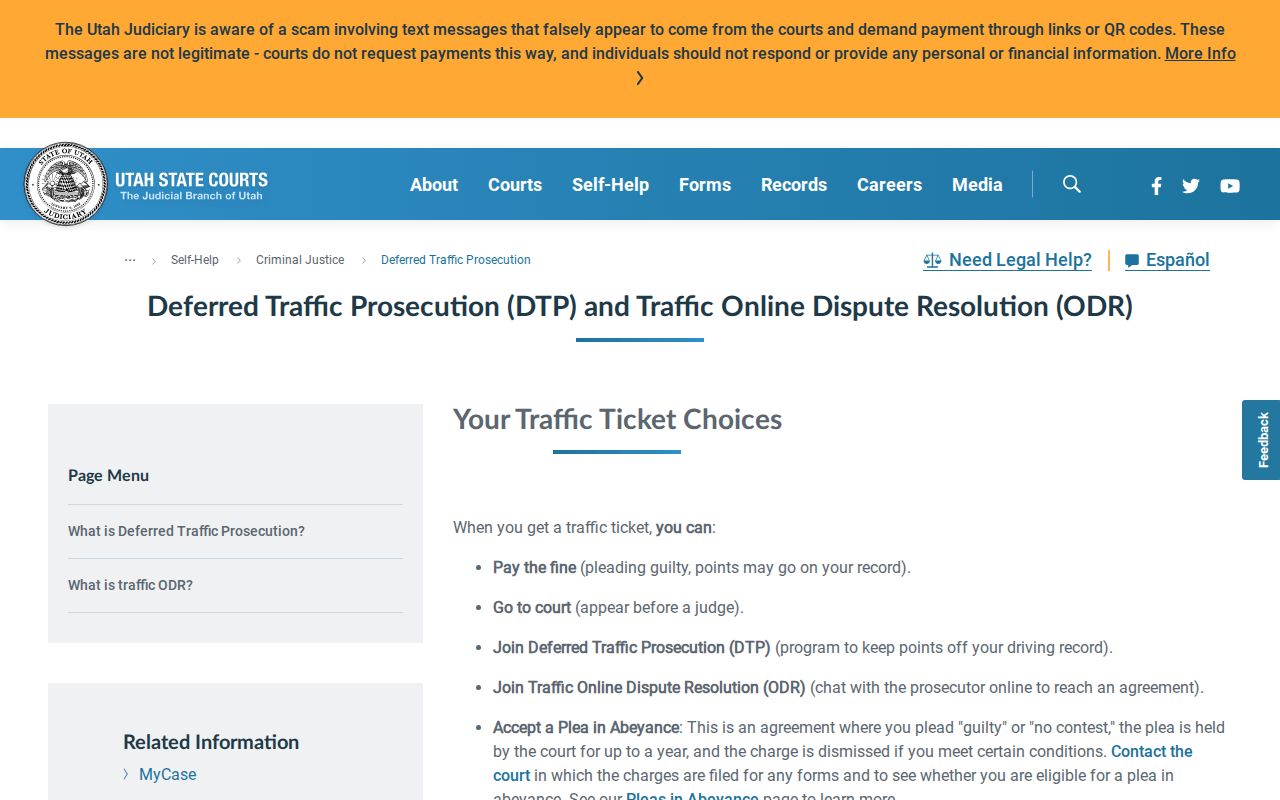
Statewide information still has to be matched to the Grand County Justice Court case. That court's own eligibility rules decide what applies.
Two Records: Court File and Driver File
Grand County keeps two separate files for a traffic case. The court record sits with the Justice Court clerk. The driver record sits with the state. The court file may show the citation number. It may also list the violation date, charge, plea, disposition, events, balance, and public documents. The Utah Driver License Division maintains the driver file. Utah Courts says some convictions are reported to that agency. Reporting happens within ten days after conviction or payment.
| Grand County court file | Utah driver file | |
|---|---|---|
| Custodian | Grand County Justice Court clerk | Utah Driver License Division |
| Purpose | Documents the citation as a court case | Maintains the state's licensing record |
| Contents | Charge, plea, events, disposition, fine, balance, and public papers | Licensing entries and reported convictions |
| Access route | Xchange or a request to the court clerk | The Driver License Division's own record process |
One search cannot replace the other. The Grand County traffic page deals with the citation's court file and court date. For a certified court copy, ask the clerk, not the licensing agency.
Grand County’s Traffic Docket Load
Official FY2023 Utah justice-court statistics explain why Grand County runs a traffic workflow of its own. The Justice Court reported 2,167 traffic-citation filings and 2,057 dispositions. Parking added 82 filings and 61 dispositions. Misdemeanor-DUI counted 68 filings and 56 dispositions. Infractions came in at 53 filings with 46 dispositions. These are fiscal-year counts, not a current pending-case total.
Traffic and parking sit in separate entries. The official county description also names river-runner safety citations, a local docket category rooted in Grand County's recreation setting. That volume is why the payment portal, calendar, and direct clerk line each matter.
Grand County Traffic Record Copy Fees
A payment fee and a court-record copy fee are two different things. The county-linked card portal charges 2.5%. That rate is subject to a $2.50 minimum. A foreign card adds another 1.5%. That is a processing charge on a payment. A copy of the Grand County traffic court record follows Utah's court-record fee rules.
| Item | Fee | Use |
|---|---|---|
| Paper court record | $0.25 per sheet | Plain copy from the court |
| Xchange document | $1 per document | Available public image, not certified |
| Certified court copy | $4 per document plus $0.50 per page | Clerk-certified court record |
| Exemplified copy | $6 per document plus $0.50 per page | Higher authentication when required |
| Card processing | 2.5%, $2.50 minimum | County-linked payment portal |
The official state ePayments source explains that a case or citation number is required. It also warns that added delinquent or warrant fees may appear.
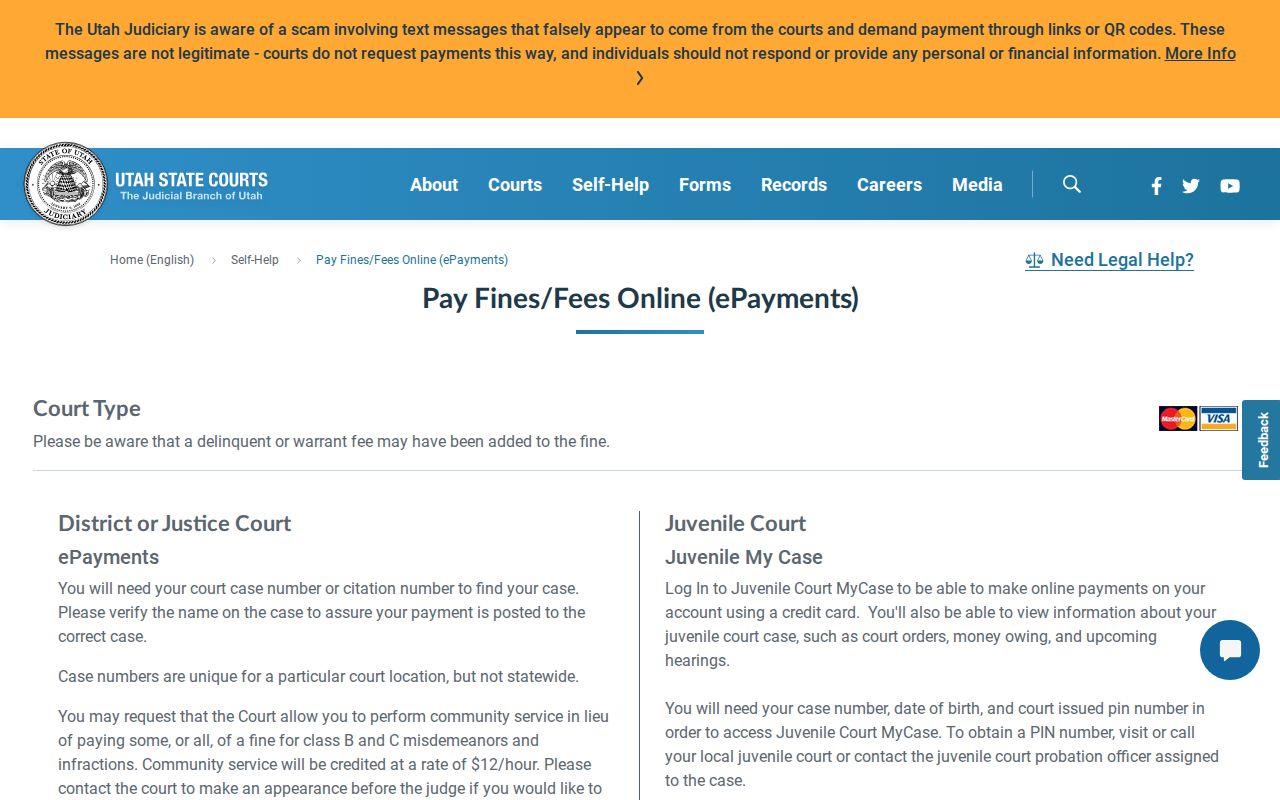
Not every court uses the state gateway. Check the Grand County page and clerk before paying.
Grand County Payment Field Check
The county-linked vendor's landing page asks for a payment method, payer name, account or case information, card data, and billing fields. It also includes a case or citation search link. Search labels vary, so assume nothing beyond the basics. Start with the citation number and court name from the ticket. The official Grand County payment screen supplies the local interface and its disclosed card charge.
Before submitting, compare the returned name and case with the citation. Then save the receipt and check the later court entry.